Using images in your teaching materials
CopyrightInformationSite
Images, like text, are copyrighted unless otherwise indicated. Assume that a work is copyrighted, even if it is not explicitly stated. Without permission from the creator, you may not simply copy images into your presentation or reader.
- Preferably use images where reuse is allowed.
For example: images with a CC license, from the public domain, etc. so-called royalty-free images. You can use these unlimitedly. - Always choose legitimately published images.
- Mention the source of the image, even if it is your own work, when reuse is allowed, or when a platform indicates that it is not required.
When is prior permission not necessary?
The author's consent is not required in the following cases:
- Materials you made yourself.
- Material that is copyrighted by the University of Amsterdam.
- Royalty-free images (e.g. with a CC license or if the copyright has expired).
- When you already have written permission from the creator(s) of the image. In that case you indicate: 'reproduced with permission'.
- When you only link to the original source.
- When permission has been arranged via licenses. For example, databases offered by the Library.
- When you use the Easy Access scheme.
Please note: in all the above cases you should always state the source.
Special arrangement for lecturers
Lecturers are allowed to do more within teaching environments than outside teaching environments when it comes to copyright. Arrangements have been made in the Easy Access agreement for copying images in presentations and readers without prior permission. With this national buy-out arrangement, you as a teachers do not have to request permission from the creator or publisher for each image. However, there are conditions attached to the agreement.
- Up to 25 images from one work and up to 10 images from one creator.
- Source citation is mandatory.
- Agreement applies for educational purposes only.
If your re-use meets these conditions, it is covered under the Easy Access agreement.
Source references for images
If you copy an image, you should include:
- The title (if there is one),
- Who is the creator,
- Who owns the copyright,
- Where the original image can be found, whether on the internet or in print,
- and whether you are allowed to use the image (e.g. via a user license or obtained permission from the copyright owner).
You post the source citation:
- Directly with the photo,
- As a footnote on the presentation slide,
- Compiled on a separate slide at the front or the back of the presentation.
In the latter case, indicate to which photo the source reference relates, for example by numbering the images.
When you copy an image with permission, you also indicate this by adding 'reproduced with permission'.
Examples
Options:
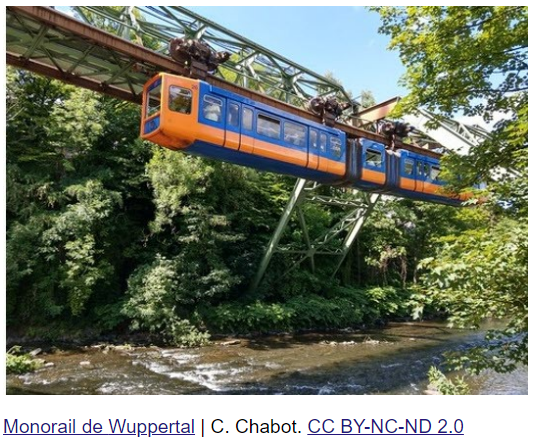
- Monorail de Wuppertal | C. Chabot. CC BY-NC-ND 2.0
- Monorail de Wuppertal by C. Chabot. CC BY-NC-ND 2.0
- Chabot | CC BY-NC-ND 2.0
The latter option will do, but the former is preferable.
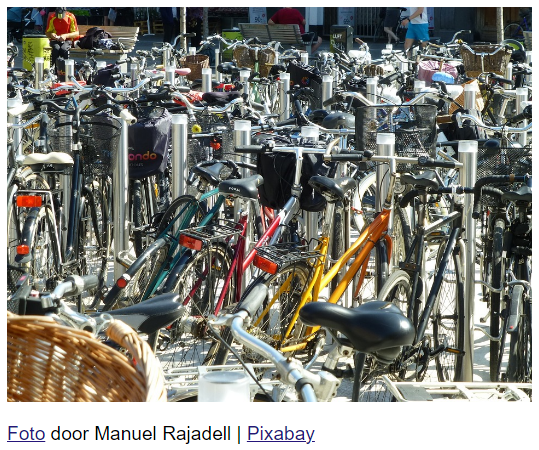
Also state the source for images that you have created using an AI tool.
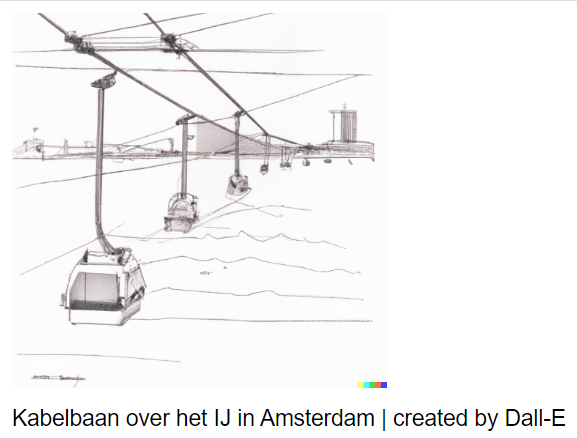
For now the Library recommends the format of OpenResearch.Amsterdam:
Title of the image (for example, the prompt you used to generate the image), followed by a vertical line (pipe) and the text ‘created by ...'.
In case of source citing by the image on the right side: Kabelbaan over het IJ in Amsterdam | Created by Dall-E.
How to find royalty-free images?
- Adam Matthews Explorer
- Openverse.org
- Unsplash.com
- Pixabay.com
- Pexels.com
- Wikimedia Commons
- Europeana
- Flickr.com
- Morguefile.com
- Powerpoint and Word
For images from platforms, always check the license of the individual work and under what conditions you may use it. In addition, always mention the source. If an image is CC-licensed, always mention which license has been granted (as a link). Find out who the (original) creator is, for example with TinEye Reverse Image Search or Google Image Search.
Need support or advice?
- Ask the Library.
- The Library is a member of the national Network of Copyright Information Points. There you will find even more information on copyright issues and related laws and regulations in higher education as well the basics on Dutch copyright law.
- Procedure for checking licensing options when copying publications in, for example, the digital learning environment or a reader.